


Experimental approach lab
Laboratory experiments under conditions representative of the industry: scaling, paraffins (wax), hydrates, corrosion, emulsions and other flow-assurance phenomena.
Petroleum engineering · Flow assurance
BrazFlow Labs is a petroleum-engineering consultancy that combines experimental flow assurance, CFD simulation and applied research to help oil & gas companies analyze, protect and optimize their systems.
In incubation at UFES — Federal University of Espírito Santo

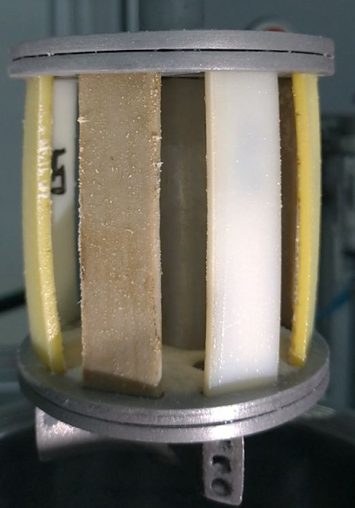

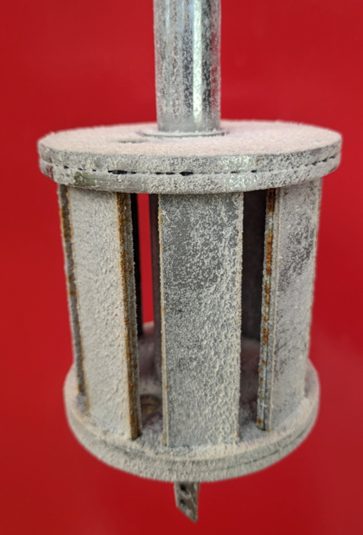
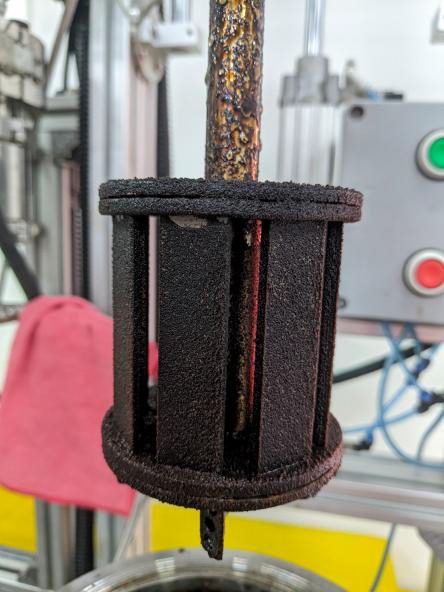
Lab testing of scaling, paraffins, hydrates, corrosion and other flow-assurance challenges.
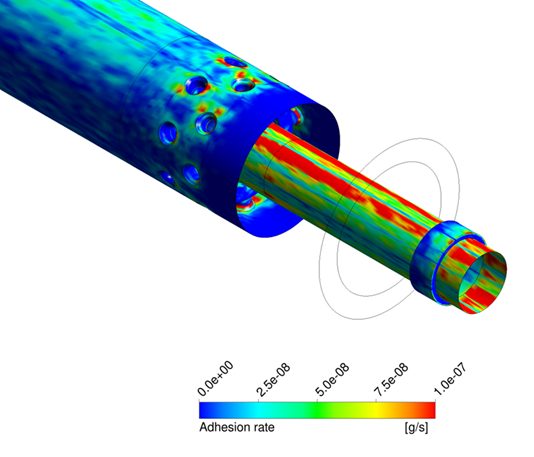
Flow analysis and optimization of valves and engineering equipment.
Engineering projects, technical support and applied research.
What we do
An experimental, hands-on approach to flow assurance and petroleum engineering — backed by CFD modeling and research.
Laboratory experiments under conditions representative of the industry: scaling, paraffins (wax), hydrates, corrosion, emulsions and other flow-assurance phenomena.
Scaling experimentation in batch reactors: testing of materials against scale, evaluation of scale inhibitors and scaling-tendency analysis.
Efficacy tests of chemical products — scale inhibitors, anti-corrosives and more — and of materials in aggressive environments (corrosion).
Flow simulations for flow-assurance risk analysis, and CFD of valves and engineering equipment for flow analysis and optimization.
A pioneering combination in Brazil: experimental data and CFD modeling working together, under real operating conditions, to evaluate scaling, corrosion and other phenomena of industrial interest.
Petroleum-engineering projects and technical support for oil & gas companies and industrial laboratories, plus applied research with universities and research groups.
Our team
BrazFlow Labs brings together PhDs and MScs — petroleum, chemical, mechanical, civil and electrical engineers — with considerable expertise in flow assurance, laboratory experimentation and CFD. Students, former students and professors work side by side, connecting academic research to real industry challenges.
6 specialists
Who we are
BrazFlow Labs is a Brazilian petroleum-engineering consultancy formed by students, former students and professors with broad experience in flow assurance and fluid engineering. We turn academic knowledge into industrial value.
We support oil & gas companies and industrial laboratories — in Brazil and abroad — through engineering projects, technical assistance and applied research, pairing hands-on experimentation with computational modeling to turn uncertainty into evidence-based decisions.
Results obtained in our reactor have already supported doctoral theses and industry-oriented studies, and publications in collaboration with other research groups and universities have increased the visibility of our experimental capabilities.
BrazFlow Labs is currently undergoing incubation at UFES — Federal University of Espírito Santo, within the university's innovation and entrepreneurship program.
Experimental and computational solutions that reduce operating costs for national industries.
Technological advances and a direct contribution to academic research.
Environmental sustainability through more efficient solutions.
How we work
A workflow that connects laboratory experimentation, physical modeling and CFD to deliver reliable results.
Our laboratory
Our reactor runs tests under high pressure and extreme temperatures, with in-situ visualization of the phenomenon and combined operation with digital modeling (CFD) — and its services are already operational.
We review fluid, production and operating data to scope the flow-assurance risk.
Batch-reactor tests of scaling, paraffins, hydrates, corrosion and chemical products under representative conditions.
Simulation of flow, valves and equipment to explore scenarios and sensitivities.
Actionable mitigation and optimization plans, with clear engineering metrics.
Knowledge
Conference materials and indexed journal articles from our team.
Petroleum Science · Vol. 23, No. 1 · pp. 434–446
Batch-reactor experiments with a rotating-cage system (ASTM G184) at up to 80 °C and 70 barg show how turbulence changes CaCO3 scaling under CO2 degassing — including a reversal point at high turbulence, linked to calcium-carbonate polymorphs.
Rio Oil & Gas 2024 · IBP · pp. 5701–5715
Studies how temperature affects carbonate scale formation in pressurized systems.
Rio Oil & Gas 2024 · IBP · pp. 4486–4500
Studies the role of CO2 degassing in carbonate scaling in pressurized systems.
Geothermics · Vol. 98 · 102272
Looks at the root cause of calcite precipitation that leads to energy loss in geothermal systems.
Fuel · Vol. 310 · 122067
Models the effect of CO2 degassing on CaCO3 precipitation and validates it with oilfield data.
SPE Annual Technical Conference and Exhibition · SPE-201524-MS
Presents two CFD-based approaches — coupled with the Discrete Phase Method and the Discrete Element Method — to improve scale prediction in completion accessories of Brazilian pre-salt wells.
SPE Annual Technical Conference and Exhibition · SPE-196180-MS
Proposes a CFD and discrete-phase-modeling approach to predict calcium carbonate deposition in intelligent-completion devices, pointing out scale hot spots in pre-salt wells.
Journal of Petroleum Science and Engineering · Vol. 181 · 106207
Separates the two main drivers of calcite precipitation during depressurization and finds that CO2 outgassing accounts for roughly 60–90% of the total under the conditions studied.
Let's talk about your project and how we can help.
Contact
Tell us about your challenge. We'll get back to you as soon as possible.